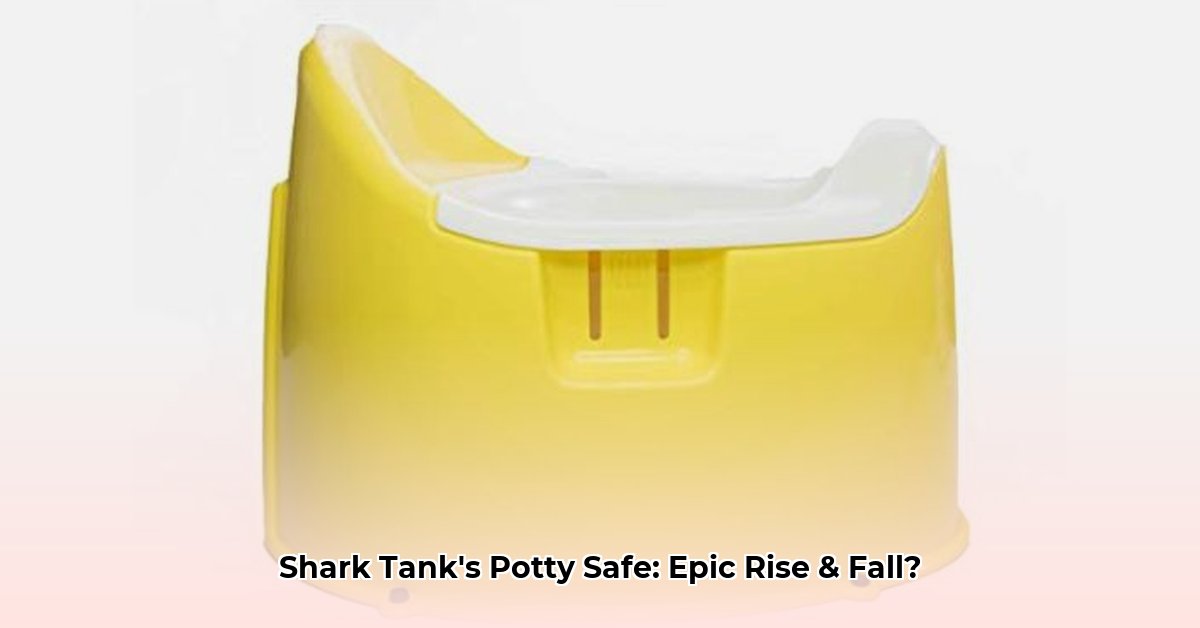
The Shark Tank Effect: A Rapid Ascent and Subsequent Decline
Potty Safe, a child-safe potty training device, experienced a dramatic rise following its appearance on Shark Tank. Lori Greiner's investment and the show's broad reach propelled sales to over $1 million annually—a 500% increase—demonstrating the show's power to catapult relatively unknown products into the national spotlight. This rapid growth, however, masked underlying vulnerabilities that ultimately led to the company's closure in 2023. Did the initial success obscure critical flaws in their business model? This case study analyzes Potty Safe's trajectory to identify key factors contributing to its downfall and offer actionable insights for aspiring entrepreneurs. For more on Shark Tank success stories, see this analysis.
Growth Challenges: Expansion and Dependence on Key Retailers
While initial success was undeniable, Potty Safe's reliance on a few major retail partners—Walmart, Bed Bath & Beyond, and Amazon—proved to be a critical weakness. Securing deals with these giants initially boosted sales, but their subsequent struggles presented significant challenges. The collapse of Bed Bath & Beyond and the loss of the Amazon platform, a crucial sales channel, dealt substantial blows to Potty Safe's revenue. This underscores the risk of over-dependence on a limited number of distribution channels, a lesson deeply embedded in Potty Safe's cautionary tale. How can businesses avoid such pitfalls? Diversification of sales channels should be a paramount concern.
The Demise: Unraveling the Factors Contributing to Failure
Potty Safe's closure highlights the fragility of a business model overly reliant on short-term gains. Although precise details regarding the company's internal operations remain scarce, several factors likely contributed to its demise. The failure of the anticipated Lori Greiner deal deprived the company of crucial capital and potentially valuable mentorship. This, coupled with the dependence on large retailers and the subsequent loss of major distribution channels, created a perfect storm leading to the company's downfall. What does this mean for future ventures? A robust long-term strategy and diversified sales channels are absolutely vital.
Dissecting the Downfall: A Risk Assessment Matrix
To better understand the interconnected risks that contributed to Potty Safe's failure, we can analyze them using a risk matrix:
| Risk Factor | Likelihood (High, Medium, Low) | Impact (High, Medium, Low) | Mitigation Strategies |
|---|---|---|---|
| Dependence on large retailers | High | High | Diversify distribution channels; explore smaller retailers and online marketplaces. Develop a strong direct-to-consumer (DTC) strategy. |
| E-commerce Channel Dependence | High | High | Develop multiple online sales channels; prioritize organic SEO and paid advertising. Build a resilient e-commerce infrastructure. |
| Failure to Secure Funding | Medium | High | Explore multiple funding sources; secure seed funding and strategically plan for future rounds. |
| Inadequate Marketing | Medium | Medium | Invest in ongoing marketing and brand building; utilize social media effectively. Develop a clear marketing plan. |
This matrix reveals that Potty Safe's core weaknesses stemmed from a lack of diversification and insufficient risk mitigation.
Lessons Learned: Actionable Strategies for Sustainable Growth
Potty Safe's experience offers invaluable lessons for entrepreneurs seeking sustainable success. The company’s rapid decline underscores the need for a comprehensive, long-term strategy that considers the following:
- Diversify Revenue Streams: Don't rely on a few key partners. Explore various distribution channels (online marketplaces, DTC sales, smaller retailers).
- Secure Multiple Funding Sources: Avoid dependence on a single investor or deal. Explore venture capital, angel investors, and crowdfunding.
- Invest in Consistent Marketing & Brand Building: Sustained marketing efforts, including social media engagement, are crucial for long-term brand recognition and customer loyalty.
- Develop a Robust Long-Term Strategy: Conduct thorough market research to understand customer needs and adapt to market trends.
- Embrace Adaptability: Be prepared to pivot and adjust strategies in response to market changes or unforeseen challenges.
Conclusion: Balancing Growth and Sustainability
Potty Safe's journey serves as a potent reminder that a Shark Tank appearance is not a guarantee of long-term success. While the show can provide a significant initial boost, lasting prosperity requires a robust business model, diversified revenue streams, and a commitment to continuous adaptation. By learning from Potty Safe's mistakes, entrepreneurs can navigate the complexities of scaling a business and ultimately achieve sustainable growth. The key takeaway is the importance of balanced growth, emphasizing long-term sustainability over short-term gains.